Inverter & storage review · US edition
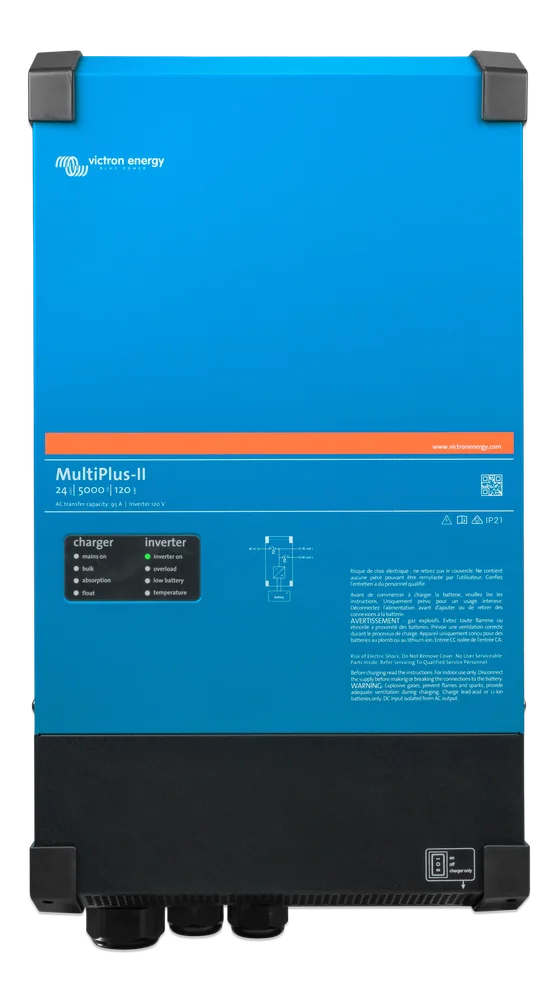
Victron Energy MultiPlus-II storage system review
A configurable inverter/charger platform. A home installation needs a complete design, not just a blue box.
On this page
- Product role
- MultiPlus-II inverter/charger [1]
- US model check
- Use the applicable 120 V model documentation and service design [1]
Our take
Victron is best approached as a system of components. MultiPlus-II inverter/chargers, supported batteries, solar charging and monitoring can form a carefully engineered installation. That flexibility can be useful, but it also makes a generic “Victron home battery” comparison unhelpful. For a US house, the exact voltage model, service arrangement and permitted grid operation are central to the decision.
MultiPlus-II storage system at a glance
Check the model in your quote against these published details.
| Product role | MultiPlus-II inverter/charger [1] |
|---|---|
| US model check | Use the applicable 120 V model documentation and service design [1] |
| Stored energy | Determined by a separately selected compatible battery bank [2] |
| Monitoring platform | GX equipment and supported system components [3] |
Capacity, continuous output and peak output measure different things. Compare like-for-like values for the complete configuration.
What is included in the system?
A Victron installation can include an inverter/charger, batteries, solar charge controllers, a GX monitoring device and the necessary switching and protection. The architecture must be designed as a whole. Ask for a wiring diagram and component schedule that explain the purpose of each device. A familiar product enclosure is not evidence that the proposed model suits a US residential service.
Conceptual energy flow. The equipment and connections depend on the installation.
What can it power during an outage?
The household service arrangement and chosen inverter configuration determine which loads can be supplied. Ask how both ordinary appliances and any larger loads are handled, and what happens when battery charge runs low. The continuous rating, starting capability and temperature conditions should come from the exact model manual. Avoid comparing volt-ampere and watt ratings as though they were identical.
A high power rating does not guarantee a long runtime. Backup duration also depends on charge level, reserve settings, appliance use and available solar.
Existing solar and future expansion
Adding storage to a home with panels
Solar may enter a design through separately selected charge controllers or an explicitly supported AC-coupled arrangement. Existing solar cannot be assumed to keep operating during an outage. Have the designer specify charging control, shutdown behavior and compatibility. This is particularly important when several manufacturers’ components share responsibility for managing energy.
Planning for more capacity
More battery capacity, additional solar charging and more inverter output are separate expansion projects. Each affects wiring, protection and configuration differently. Establish the intended future system before selecting the first components. A modular ecosystem offers options, but does not remove the need to verify the permitted combination and installation requirements.
The advantages and the trade-offs
Reasons to shortlist it
- Separate conversion, storage and monitoring components can be configured for a defined project.
- Manufacturer provides detailed technical and integration documentation.
- Battery capacity can be selected independently of the inverter/charger.
What to weigh up
- This is not one preconfigured home battery with a single capacity rating.
- International 230 V models are not substitutes for the required US equipment.
- Grid export, service configuration and approvals require explicit confirmation.
Warranty, monitoring and support
A configurable system benefits from unusually good documentation. Keep configuration backups, component warranties, firmware versions and access to monitoring. Identify a service provider who understands the whole installation. If that knowledge exists only with the original designer, future troubleshooting can be harder than the component warranty terms suggest.
A useful handover includes your equipment schedule, the applicable warranty documents, homeowner access to monitoring and a named service contact. Ask the installer to demonstrate the operating mode you are buying.
What affects the installed cost?
Include engineering, enclosure and mounting, protective equipment, monitoring, commissioning and any required approvals. Comparing only the inverter/charger purchase price with an integrated battery installation leaves out much of the project. Ask how much of the quote covers the system design and how ongoing support is provided.
| Equipment | Battery quantity, inverter, gateway or transfer equipment and mounting |
|---|---|
| Electrical work | Panel changes, cable routes, protection and backed-up circuits |
| Delivery | Permits, installation, commissioning and monitoring handover |
| Aftercare | Workmanship cover, diagnostic visits and replacement labor |
Is MultiPlus-II storage system right for your home?
Shortlist Victron when a specialist can demonstrate a suitable, documented system for your application. For a standard grid-connected home seeking a simple packaged installation, compare the additional design and ownership responsibilities carefully. The right choice depends on the actual configuration and local requirements, not the breadth of the component catalogue.
Compare an actual installation.
Take these questions to an installer and get a design for your home.
Your questions, answered
Is MultiPlus-II a battery?
No. It is an inverter/charger used with a separately specified battery bank and other system components.
Can I use specifications from a 230 V model?
No. Use the manual for the exact equipment and the intended US service arrangement.
Does the equipment automatically permit grid export?
No such assumption should be made. The configuration, certifications and utility requirements must be checked for the project.
Sources and review method
This is a research-based assessment of published manufacturer information, not a hands-on laboratory test or an owner-review average. Our judgments explain the buying implications of the equipment and its limitations. We do not assign star ratings, invent installation prices or infer local installer availability from a product page.
Check the current US model, configuration and warranty before ordering. Where regional compatibility or terms could not be established, we say so in the review. Shortlist Solar is an installer referral service; a quote request is optional and subject to participating-installer availability.