San Francisco · CA · Enphase IQ Battery
Enphase battery installers in San Francisco, CA.
Request installer matches in San Francisco, subject to availability — Enphase-experienced prioritized
Get your Enphase quotes for San Francisco
Do you have solar already?
Vetted installers only — typically 2+ years in business, decent reviews.
- ✓ IQ Battery 5P combines storage with built-in microinverters
- ✓ Size your system with multiple battery units as needed
- ✓ Check state and utility rebates; eligibility varies
- ✓ Shortlist Solar-vetted installers, subject to availability
The second-largest US residential battery brand by installed share, built on the country’s biggest microinverter base.
- ✓ 100% free, no obligation
- ✓ Up to 3 vetted installers — and no one else sees your details
- ✓ Vetted installers — typically 2+ years in business
Get my Enphase quotes for San Francisco Get my Enphase quotes — free · up to 3 vetted installers · takes about a minute.
What an Enphase system actually is
The IQ Battery is AC-coupled, which makes it one of the two straightforward retrofits in this comparison: it works alongside existing solar without replacing your inverter, and if your panels already run on Enphase microinverters it is the natural extension of that system. Each unit contains several grid-forming microinverters rather than one central inverter, so a single failure degrades output instead of stopping it. Units come in two sizes and stack, and backup needs the IQ System Controller. The trade-off is blunt — smaller capacity per box means wall space and cost per kilowatt-hour both become limiting once you want a large system.
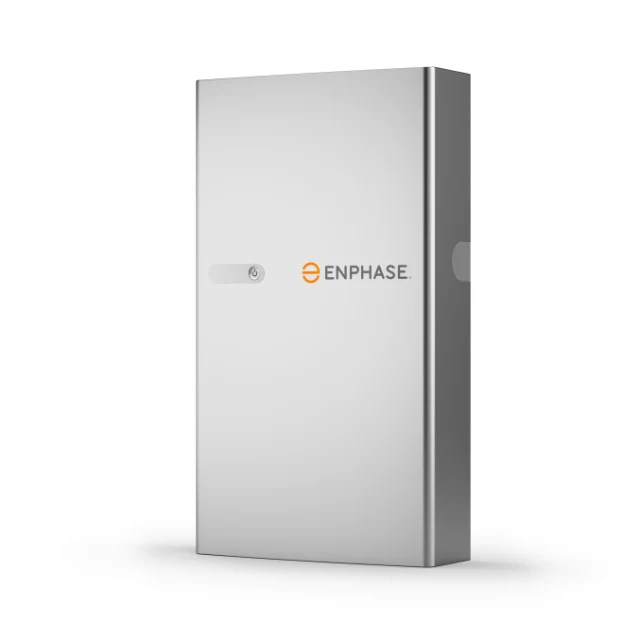
- IQ Battery 5P — Small unit, stacked in increments. AC-coupled LFP unit with six embedded grid-forming microinverters instead of one central inverter.
- IQ Battery 10C — Larger unit, two battery blocks in one enclosure. The current-generation unit with four embedded microinverters and a higher continuous output.
- IQ System Controller — Required for backup. Manages islanding during an outage. Check whether it is in the quoted price.
Enphase at a glance — sourced
- Current Enphase line-up in the US: IQ Battery 5P (5 kWh usable), IQ Battery 10C (10 kWh usable). source
- Enphase is AC-coupled: it sits beside the existing solar inverter, which stays in place on a retrofit. source
- Usable capacity runs from 5 kWh to 10 kWh. source
- Capacity can be added later without replacing the inverter. source
- The manufacturer warranty is 15 years, with 60% of original capacity guaranteed at the end of it. source
- Listed models are certified to UL 9540, the safety standard permit offices and utilities check for home storage. source
A good fit in San Francisco if…
- Retrofitting a battery onto existing solar without replacing the inverter — this is where Enphase genuinely wins
- Homes already running Enphase microinverters that want one ecosystem and one app
- Buyers who want to start small and add capacity in steps rather than commit up front
- Shaded or complex roofs where the per-panel architecture already suits the site
Look at something else if…
- You want a large system — the cost and the wall space both become hard to justify at scale
- You are optimizing for payback period rather than flexibility
- You have limited wall space; each unit needs its own footprint
- You want the lowest cost per kilowatt-hour available in the market
An Enphase in San Francisco performs exactly as well as its configuration — and the configuration is decided by whoever installs it.
Why the installer matters more than the battery
The hardware is rarely the problem on a bad battery install — the design, the panel work and the commissioning are. Installers are vetted before they join — typically 2+ years in business with a track record of decent reviews. Matching depends on current participating installers for your address and brand. There may be fewer than three or no matches. Free for homeowners.
What specifically goes wrong on an Enphase install
- AC coupling means the battery and existing solar must be metered and configured correctly, or self-consumption never performs as modeled
- Multi-unit installs need deliberate wall planning — this is where cramped or awkward siting happens
- Backup without the IQ System Controller is not backup; a quote that omits it is quoting a self-consumption-only system
- The charging temperature range is narrower than the discharge range, so siting matters in hot and cold climates — a garage is often the sensible default
This is exactly what we vet for — get my Enphase quotes in San Francisco.
That's why Enphase quotes in San Francisco are only comparable when the scope matches. Here's what to hold constant.
Comparing Enphase quotes in San Francisco
We don't publish price bands, because installed prices move constantly and depend on your roof, service panel and utility. What we can tell you is what to hold constant so three quotes are actually comparable — match these first, then compare dollars per usable kWh.
- How many units and which size — capacity scales in steps, and so does the price
- Whether the IQ System Controller needed for backup is included
- Wall space and mounting: multiple units need real planning, in a garage or out
- Whether your existing solar needs any change to work alongside it
- Whether you are staying inside the Enphase ecosystem for solar, storage and EV charging, or mixing
A cheaper quote that skips backup hardware, assumes an inverter you don't have, or quietly changes the configuration isn't cheaper — it's a different job.
Request Enphase quotes on the same scope, subject to participating-installer availability for your address in San Francisco.
Battery incentives in California
- Residential Clean Energy Credit (IRC §25D) (federal) — The 30% federal tax credit for home solar and battery storage no longer applies to systems placed in service from January 1, 2026. What ended and what still applies
- California — no state battery program has been verified on this site yet. Ask each installer what your verified utility offers and to show the program page.
Still weighing an Enphase up? The San Francisco numbers and the deeper reading are below.
The San Francisco numbers
A delivery utility has not been verified for this San Francisco page. Identify yours by the service address before checking Enphase interconnection, export terms or rates; an overlapping ZIP code is not enough.
The Census Bureau estimates 827,526 residents in San Francisco in 2024. The city record uses San Francisco County as its county reference and includes 30 overlapping ZIP codes. These are geographic facts, not evidence of participating Enphase installers or local availability.
The solar-resource sample for San Francisco is at 37.727239° latitude, -123.032229° longitude. Census land-overlap records include ZIPs 94124, 94112, 94122, 94132, 94134, 94121, 94116, 94110 (first eight by land overlap). These locate the page data; they do not establish utility territory or installer coverage.
NASA POWER climatology gives San Francisco an annual average of 4.4 peak sun hours per day. This regional solar-resource measure does not predict rooftop production or whether an Enphase will refill. Array size, orientation, shading, equipment losses, household use and battery settings all need a site-specific assessment.
At San Francisco's coordinates, NASA POWER climatology ranges from about 6.9 peak sun hours per day in Jun to 2 in Dec — a 3.5× ratio in the solar resource, not a measured generation ratio. For Enphase, assess seasonal production and household loads together; neither the annual average nor the lowest month alone determines battery capacity or refill frequency.
Show the seasonal solar resource
| Month | Peak sun hours | Illustrative kWh/day |
|---|---|---|
| Jan | 2.4 | 20.4 kWh |
| Feb | 3.3 | 28.1 kWh |
| Mar | 4.5 | 38.3 kWh |
| Apr | 5.8 | 49.3 kWh |
| May | 6.3 | 53.6 kWh |
| Jun | 6.9 | 58.7 kWh |
| Jul | 5.4 | 45.9 kWh |
| Aug | 4.8 | 40.8 kWh |
| Sep | 4.6 | 39.1 kWh |
| Oct | 3.7 | 31.5 kWh |
| Nov | 2.7 | 23 kWh |
| Dec | 2 | 17 kWh |
Monthly figures from the NASA POWER climatology (2001–2020) at San Francisco's coordinates; annual average 4.4 peak sun hours; Illustration: 10 kW × sun hours × an assumed 85% system factor, not a roof-specific production or battery-refill forecast.
Enphase vs Tesla Powerwall 3
- Where Enphase wins — A true retrofit onto any existing solar without changing your inverter, finer sizing steps, no single point of failure inside the unit, and the best monitoring app in the category.
- Where Enphase loses — Higher cost per usable kilowatt-hour, more wall space for the same capacity, no integrated solar inverter for a new install, and a weaker case if you want one large system rather than several small ones.
We don't sell batteries, so we have no reason to talk one up.
What owning an Enphase is actually like
Spec sheets stop being interesting about a week after install. These are the things owners notice in year one.
- The app and per-panel monitoring are widely rated as the best in the category — if you want to see exactly which panel is underperforming, this is the ecosystem that shows you.
- Everything is passively cooled with no fans or moving parts, which makes it one of the quieter options and a reasonable candidate for a garage wall.
- Utility virtual-power-plant programs in several states support Enphase systems, and the software can be enrolled without new hardware.
- Adding capacity later is genuinely easy — units stack — but each one needs its own wall space, so plan where number three and four will go before you buy number one.
Four questions to ask any Enphase quote
- How many units, which size, and where exactly will they be mounted?
- Is the IQ System Controller included, and which circuits does it back up?
- Does my existing solar need any change to work with the battery?
- If I add EV charging later, does it stay on the same app and meter?
Grid connection in San Francisco
- Utility interconnection — A Enphase installation in San Francisco requires checking interconnection requirements with the delivery utility for the exact address. Identify the utility from the bill or official service map. Ask the installer to identify the equipment and complete-system approvals required for the proposed configuration, file the application and flag any constraint in the quote.
- Electrical permit and inspection — the install needs an electrical permit from the local permitting authority and an inspection before it is switched on. Ask whether permit fees and the inspection are inside the Enphase quote.
- Backup scope is a design decision — whole-home versus a backup sub-panel depends on your main service panel and the transfer hardware, not on the battery alone. Have the circuits that stay live listed by name on the quote.
Ready for Enphase quotes in San Francisco?
Request Enphase quotes for San Francisco, subject to participating-installer availability.
Geography around San Francisco
This page covers the wider San Francisco area. A quote request uses your ZIP code; matches depend on current participating installers for your address and preferred brand.
ZIP codes in San Francisco: 94124, 94112, 94122, 94132, 94134, 94121, 94116, 94110, 94129, 94131, 94118, 94127, 94107, 94114, 94103, 94117, 94115, 94123, 94109, 94130, 94102, 94133, 94158, 94105, 94111, 94108, 94188, 94104, 94501, 94920.
Nearby places shown for geographic context:
- Bolinas (94924) · 22.0 mi from San Francisco
- Stinson Beach (94970) · 24.1 mi from San Francisco
- Muir Beach (94965) · 26.3 mi from San Francisco
Enphase installers across California, town by town
Every Enphase page in California, nearest to San Francisco first.
Comparing with the nearest big city? Enphase battery installation Los Angeles
- Enphase installers Daly City — 31 mi
- Enphase installers Richmond — 40 mi
- Enphase battery installation Berkeley — 41 mi
- Enphase battery installation San Mateo — 41 mi
- Enphase installers Oakland — 44 mi
- Enphase battery installers in Vallejo — 50 mi
- Enphase installers Hayward — 51 mi
- Enphase battery installers in Santa Rosa — 53 mi
- Enphase installers Concord — 59 mi
- Enphase battery installation Sunnyvale — 60 mi
- Enphase battery installation Fremont — 62 mi
- Enphase battery installers in Santa Clara — 63 mi
- Enphase battery installers in Fairfield — 66 mi
- Enphase battery installers in Antioch — 70 mi
- Enphase battery installers in Vacaville — 73 mi
- Enphase battery installers in San Jose — 73 mi
- Enphase battery installation Tracy — 86 mi
- Enphase battery installers in Stockton — 96 mi
- Enphase installers Elk Grove — 101 mi
- Enphase battery installation Sacramento — 103 mi
- Enphase battery installers in Salinas — 105 mi
- Enphase battery installation Modesto — 111 mi
- Enphase battery installation Roseville — 117 mi
- Enphase installers Chico — 155 mi
- Enphase battery installers in Fresno — 190 mi
- Enphase battery installers in Clovis — 194 mi
- Enphase battery installation Visalia — 226 mi
- Enphase battery installers in Santa Maria — 241 mi
- Enphase battery installers in Bakersfield — 276 mi
- Enphase battery installers in San Buenaventura (Ventura) — 319 mi
- Enphase installers Oxnard — 324 mi
- Enphase battery installers in Thousand Oaks — 337 mi
- Enphase battery installers in Simi Valley — 338 mi
- Enphase installers Santa Clarita — 341 mi
- Enphase battery installers in Lancaster — 342 mi
- Enphase installers Palmdale — 350 mi
- Enphase battery installers in Burbank — 359 mi
- Enphase installers Glendale — 363 mi
- Enphase battery installation Pasadena — 368 mi
- Enphase battery installers in Inglewood — 370 mi
- Enphase battery installers in Torrance — 376 mi
- Enphase battery installation El Monte — 377 mi
- Enphase battery installers in Downey — 379 mi
- Enphase installers West Covina — 383 mi
- Enphase installers Long Beach — 385 mi
- Enphase battery installation Victorville — 386 mi
- Enphase installers Pomona — 389 mi
- Enphase battery installers in Fullerton — 390 mi
- Enphase battery installation Hesperia — 393 mi
- Enphase installers Rancho Cucamonga — 394 mi
- Enphase battery installers in Garden Grove — 394 mi
- Enphase battery installers in Huntington Beach — 396 mi
- Enphase installers Ontario — 396 mi
- Enphase battery installers in Orange — 398 mi
- Enphase battery installers in Anaheim — 398 mi
- Enphase battery installers in Santa Ana — 399 mi
- Enphase battery installation Fontana — 400 mi
- Enphase battery installation Costa Mesa — 401 mi
- Enphase battery installation Rialto — 402 mi
- Enphase battery installation Jurupa Valley — 404 mi
- Enphase battery installers in San Bernardino — 405 mi
- Enphase battery installers in Irvine — 406 mi
- Enphase installers Corona — 406 mi
- Enphase battery installation Riverside — 410 mi
- Enphase battery installers in Moreno Valley — 419 mi
- Enphase battery installation Menifee — 431 mi
- Enphase battery installers in Murrieta — 436 mi
- Enphase battery installers in Temecula — 442 mi
- Enphase battery installation Oceanside — 447 mi
- Enphase battery installers in Carlsbad — 454 mi
- Enphase battery installers in Escondido — 462 mi
- Enphase battery installers in San Diego — 475 mi
- Enphase battery installers in El Cajon — 483 mi
- Enphase battery installation Chula Vista — 489 mi
Beyond Enphase in San Francisco
Comparing Enphase with another brand in San Francisco? See Lunar Energy installers San Francisco, BYD battery installers in San Francisco, Pytes installers San Francisco, Discover Energy Systems installers San Francisco, Victron Energy battery installers in San Francisco, Tesla Powerwall battery installers in San Francisco.
Enphase questions, San Francisco answers
Can I add an Enphase battery to solar that is not Enphase in San Francisco?
Yes. The IQ Battery is AC-coupled, so it works alongside an existing solar system without replacing your inverter — Enphase describes it as an all-in-one AC-coupled storage system. Batteries that are DC-coupled, including SolarEdge and Sigenergy, need their own matching inverter, which is exactly what makes those retrofits expensive. Ask the installer to confirm how your existing system will be metered.
Is the Enphase IQ Battery worth it for a San Francisco home?
It is one of the more expensive options per usable kilowatt-hour, and that is a fair criticism if you are judging on payback alone. It earns its place in three situations: retrofitting onto existing solar, homes already on Enphase microinverters, and households that want to start small and grow. Outside those cases, other batteries do the same job for less.
How much backup does one Enphase battery provide in San Francisco, CA?
One IQ Battery 5P runs essentials rather than a whole house with air conditioning; the larger 10C moves that line up. Most households wanting meaningful backup install two or more units — which is exactly where the cost and wall-space trade-off starts to bite. Ask your installer to model your actual evening load rather than quoting a unit count off the top of their head.
What happens if part of an Enphase battery fails if I live in San Francisco?
It keeps running at reduced output rather than stopping. Each unit contains several grid-forming microinverters instead of one central inverter, so a single failure costs you a fraction of the unit’s power rather than the whole battery. That redundancy is the core of Enphase’s engineering argument and is genuinely different from every other battery on this list.
Is the Enphase IQ Battery UL 9540 listed for San Francisco households?
Enphase’s IQ Battery 10C datasheet describes the unit as evaluated to UL 9540A, and Enphase batteries are listed for US residential storage applications. Your installer files the listing with the permit and utility interconnection paperwork; ask them to confirm the specific model number, which is what the permit office and the utility check.
Will Enphase batteries run my air conditioning across San Francisco?
A 10C runs a modern split system comfortably; central air generally needs more than one unit. Because capacity comes in steps, Enphase gives you a precise way to size for that load rather than over- or under-buying — but each step costs wall space as well as money. Ask your installer to model an actual summer evening rather than quoting a round number.
Can Enphase batteries be installed in a garage in San Francisco?
Yes, and a garage is often the better choice. The units are passively cooled with no fans or moving parts, which makes them quiet enough for a garage or utility room, and keeping them out of direct summer heat and hard winter cold protects long-term output. Wall space is the practical constraint once you go past two units.
Who installs an Enphase battery in San Francisco?
You can request Enphase quotes for San Francisco. Matching depends on current participating installers for your address and brand; there may be fewer than three or no matches. This city page does not establish installer availability. Free for homeowners.
How do I compare Enphase quotes in San Francisco?
Installed prices move constantly and vary by site, so compare on dollars per usable kWh rather than headline totals — and only once the scope matches. For this brand the variables that matter are: how many units and which size — capacity scales in steps, and so does the price; whether the IQ System Controller needed for backup is included; wall space and mounting: multiple units need real planning, in a garage or out. Compare any available quotes on the same scope, then compare the installers harder than the numbers.
What battery incentives apply in San Francisco?
The federal Residential Clean Energy Credit ended for systems placed in service after December 31, 2025, so a 2026 Enphase install in San Francisco does not get the old 30% credit — a quote that still shows it needs re-pricing. No California battery program has been verified on this site yet; ask each installer what your utility offers and to show the program page, not a brochure line.
Who approves an Enphase install in San Francisco?
Your electric utility, through an interconnection application, and the local permitting authority, through an electrical permit. A good installer files both and flags any constraint in the quote — not after. What gets scrutinized depends on the configuration: aC coupling means the battery and existing solar must be metered and configured correctly, or self-consumption never performs as modeled.
Are your San Francisco installers Enphase-certified?
We do not have a current participating-installer record establishing Enphase certification or availability for every address in San Francisco. If a match is available, verify the specific crew, current license, brand training and relevant installation experience before signing.
Is an Enphase battery worth it in San Francisco?
San Francisco averages 4.4 peak sun hours in NASA POWER climatology. That does not establish household solar output, battery cycling or savings. Wildfire-season Public Safety Power Shutoffs and summer heat-wave grid strain are the outages homeowners here plan around. Ask for a site-specific production and load assessment, plus the import price and export credit on your actual plan. Confirm the delivery utility and any separate retail provider for your address.
Answered what you needed?
Request Enphase quotes for San Francisco, subject to participating-installer availability — free, no obligation.
Data and source notes. San Francisco data comes from NASA POWER (sun hours) and the US Census Bureau (population, places and ZIP codes). Utility references require an address check. Enphase product information is sourced below; its source review date is 2026-09-05. These records do not establish installer participation, manufacturer certification or availability. Verify any proposed crew's license, training and installation experience before signing.
- Enphase — IQ Battery 5P (US store page)
- Enphase — IQ Battery 10C (US store page)
- Enphase — IQ Battery 10C North America data sheet
- pv magazine — US residential equipment share (EnergySage H1 2025)
All California locations · All Enphase locations · About Shortlist Solar