Florida
SolarEdge battery installers in Florida.
Request installer matches in Florida, subject to availability — SolarEdge-experienced prioritized
Get SolarEdge quotes in Florida
Enter your ZIP code to estimate savings and request quotes.
No contact details needed to see your estimate. Request quotes only when you’re ready.
- ✓ Home Battery connects to a compatible SolarEdge inverter
- ✓ Plan solar, storage and backup within the SolarEdge system
- ✓ Check state and utility rebates; eligibility varies
- ✓ Shortlist Solar-vetted installers, subject to availability
- ✓ 100% free, no obligation
- ✓ Up to 3 vetted installers — and no one else sees your details
- ✓ Vetted installers — typically 2+ years in business
Not sure a battery stacks up yet? Free savings estimate first
SolarEdge at a glance
- DC-coupled inside a SolarEdge system — no second conversion step
- Passively cooled and near-silent
- One company for inverter, optimizers, battery and app
Why the SolarEdge Home Battery is different
The SolarEdge Home Battery answers a narrower question than the rest of this comparison: not “which battery?” but “which battery for a SolarEdge system?” It is DC-coupled to the SolarEdge Home Hub inverter and to nothing else, so the panels, the optimizers on them, the inverter and the battery are one company’s system, reporting into one app and covered by one warranty owner.
DC coupling is the engineering argument. Solar is DC, the battery stores DC, and an AC-coupled battery has to convert to AC and back to store it; this one stores it directly, which is where SolarEdge’s efficiency figure comes from. On a new SolarEdge install designed as a whole, that is a real advantage. For a household whose actual question is keeping an existing inverter from another brand, it is irrelevant — the inverter would have to go.
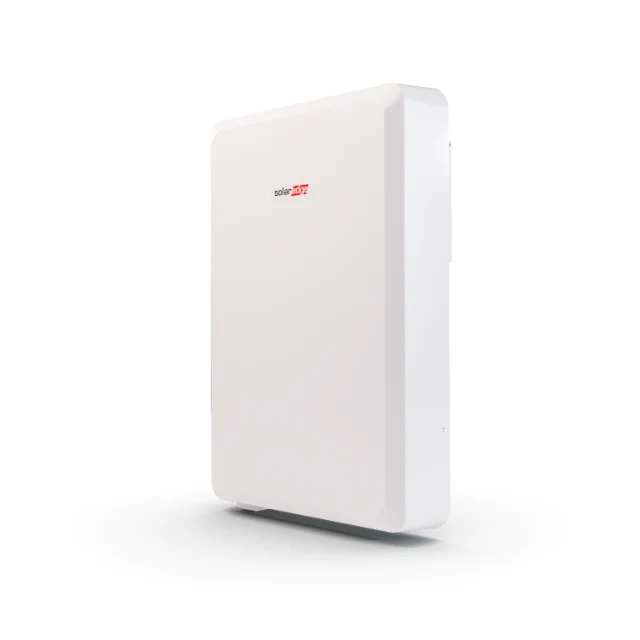
The second difference is how quietly it lives. The battery is passively cooled with no fans, rated for indoor or outdoor mounting, and quiet enough for a utility room shared with living space. Up to three units stack on one inverter, which is enough for most homes and a hard ceiling for the rest.
The honest trade-offs are the ecosystem’s edges. It only works inside a SolarEdge system. Backup needs an additional Backup Interface and, SolarEdge notes, may depend on local regulation and a firmware update. Three units is the limit. And the warranty attaches conditions to the temperature where the unit lives, so siting is a decision rather than a preference.
The SolarEdge system, piece by piece
The Home Hub inverter is the heart. It runs the panels through their optimizers and the battery on its DC side, and the battery does not function without it — the first thing to confirm on any SolarEdge quote is the exact inverter model on your wall, because older SolarEdge inverters are not battery-ready and a replacement changes the quote entirely.
The Home Battery 400V is the storage: one unit, stackable to three on a single inverter, wall or floor mounted, communicating with the inverter wirelessly. Installing more than one needs the right branch connection hardware, which an inexperienced crew leaves out.
The Backup Interface is what isolates the home in an outage. SolarEdge lists backup as subject to local regulation and possibly needing additional components and a firmware upgrade, so it has to be quoted explicitly — without it the system does self-consumption only.
The optimizers on the roof are the reason SolarEdge owners tend to stay inside the ecosystem: panel-level visibility and one app across solar, storage and EV charging. They are also part of the install, and a quote should say whether they are already on the roof or being added.
Put SolarEdge to the test on your own numbers
Reading about it only goes so far — real quotes are where a SolarEdge decision gets made. Request quotes in Florida, subject to participating-installer availability. Free for homeowners.
What the SolarEdge battery does best
Being the obvious storage for a SolarEdge home. If your solar runs on a Home Hub inverter, the battery couples on the DC side, reports into the same app as your optimizers, and keeps warranty and support with one company. Inside that system there is no simpler answer.
Storing solar without the round trip. DC coupling avoids the AC conversion and back that an AC-coupled battery has to make, which is the mechanism behind the efficiency figure on the datasheet and a genuine advantage on a system designed as a whole.
Living quietly indoors. Passive cooling and a low noise figure make it one of the few home batteries that can sit on a wall shared with living space without anyone noticing it is there.
Keeping one throat to choke. Inverter, optimizers, battery and app from one company means one warranty owner and one support line — a simplification owners of mixed-brand systems tend to envy the first time something needs fixing.
Who a SolarEdge battery suits — and who it does not
It suits the home already running a SolarEdge Home Hub inverter, and the home buying a new SolarEdge system with the battery designed in from the start. It suits buyers who want one warranty owner across the whole solar-and-storage system, and households that want a quiet indoor install.
It does not suit any home whose solar runs on another brand’s inverter — adding this battery means replacing that inverter, and an AC-coupled battery keeps it. It does not suit anyone planning beyond three units, anyone who wants capacity in small increments, or anyone who wants generator integration in the base design.
It also does not suit the buyer who wants the widest choice of installers. The crews that fit it are SolarEdge crews; that is a strength inside the ecosystem and a narrower field outside it.
On money, judge value per usable kilowatt-hour at the capacity you would actually buy, make sure the Backup Interface is inside the number if backup is the point, and — if your inverter is not a Home Hub — price the inverter replacement as part of the quote rather than discovering it later. Never accept a quote that still shows a federal credit for a 2026 install.
SolarEdge in Florida
Hurricane season is the outage most homeowners here plan around — multi-day losses of grid power after a storm, not a flicker. For a SolarEdge household that turns on one component: the Backup Interface, without which the battery does self-consumption only. In Florida, ask each installer whether it is in the quote, which circuits it keeps live, and whether the inverter’s output and your battery count cover the outage you actually get.
What Florida utilities credit for exported solar is set utility by utility and rule by rule, so ask each installer to show the export credit on your own tariff: a stored kilowatt-hour is worth what you avoid buying, not what exporting earns, and that gap is the number the battery lives on. A DC-coupled battery stores solar without the round trip through AC, so the same credit gap works a little harder here than in an AC-coupled system — the app shows the stored-versus-exported split so you can check the arithmetic against your own bill.
Put SolarEdge to the test on your own numbers
Reading about it only goes so far — real quotes are where a SolarEdge decision gets made. Request quotes in Florida, subject to participating-installer availability. Free for homeowners.
The installer decides the SolarEdge outcome
The second thing to check is the panel: a SolarEdge Home Battery is DC-coupled through the Home Hub inverter, so the backup interface, the rapid-shutdown wiring and the main service panel have to be sized and labelled as one system before the inspector sees it. A crew that has done the SolarEdge backup interface before will show you the single-line drawing without being asked; one that has not will discover the panel work on install day and price it as a change order, after you have signed.
A SolarEdge battery quote starts with the model number on the inverter. Putting the battery on an older or non-Hub inverter is the classic mistake, and the crew that confirms the model before pricing anything is the crew that has done this before. Ask them to read it off the wall, not off the sales sheet.
Backup is the second test. The Backup Interface has to be in the quote for backup to exist, and the circuits it keeps live should be listed by name. Siting is the third — the battery has a stated ambient temperature window and the warranty attaches conditions to it, so a garage or utility room usually beats an exposed wall, and the installer should say so unprompted.
Multiple batteries need the right branch connection hardware and an inverter sized for them on day one. A proper handover finishes the job: the app on your real rate plan, the backup reserve set to a number you chose, and you shown which switch isolates what.
That is the matching problem this site exists to solve. Where participating installers are available for your address and brand, you can request quotes. There may be fewer than three or no matches. Check SolarEdge experience where they have it. We sell no hardware, the service is free for homeowners, and matching a small number is deliberate: each installer has a genuine shot at the work, which is what buys you designed systems instead of templated ones.
SolarEdge in this state
Why the installer matters more than the battery
The install decides the outcome more than the hardware does.
That is the part a brand cannot fix for you. Every installer we match you with in Florida is vetted — typically 2+ years in business, with a track record of decent reviews. Matches depend on current participating installers for your address and brand; there may be fewer than three or none.
Battery incentives in Florida
Residential Clean Energy Credit (IRC §25D) (federal) — The 30% federal tax credit for home solar and battery storage no longer applies to systems placed in service from January 1, 2026.
Florida — no state battery program has been verified on this site yet. Ask each installer what your utility offers and to show the program page.
Ready for SolarEdge quotes in Florida?
Request quotes by ZIP code, subject to participating-installer availability. Any state or utility program you qualify for is applied at quote. Free, no obligation, maximum 3 installers ever.
SolarEdge installers in Jacksonville
- SolarEdge battery installers in Jacksonville — serving Jacksonville and surrounds
More Florida cities
- SolarEdge installers Miami — serving Miami and surrounds
- SolarEdge battery installers in Tampa — serving Tampa and surrounds
- SolarEdge battery installers in Orlando — serving Orlando and surrounds
- SolarEdge installers St. Petersburg — serving St. Petersburg and surrounds
- SolarEdge battery installation Port St. Lucie — serving Port St. Lucie and surrounds
- SolarEdge battery installers in Hialeah — serving Hialeah and surrounds
- SolarEdge battery installers in Cape Coral — serving Cape Coral and surrounds
- SolarEdge battery installers in Tallahassee — serving Tallahassee and surrounds
- SolarEdge battery installers in Fort Lauderdale — serving Fort Lauderdale and surrounds
- SolarEdge installers Pembroke Pines — serving Pembroke Pines and surrounds
- SolarEdge battery installers in Hollywood — serving Hollywood and surrounds
- SolarEdge battery installers in Gainesville — serving Gainesville and surrounds
- SolarEdge battery installers in Miramar — serving Miramar and surrounds
- SolarEdge installers Palm Bay — serving Palm Bay and surrounds
- SolarEdge battery installation Coral Springs — serving Coral Springs and surrounds
- SolarEdge battery installers in West Palm Beach — serving West Palm Beach and surrounds
- SolarEdge battery installers in Lakeland — serving Lakeland and surrounds
- SolarEdge battery installation Pompano Beach — serving Pompano Beach and surrounds
- SolarEdge battery installation Clearwater — serving Clearwater and surrounds
- SolarEdge battery installers in Miami Gardens — serving Miami Gardens and surrounds
- SolarEdge battery installers in Davie — serving Davie and surrounds
- SolarEdge battery installers in Palm Coast — serving Palm Coast and surrounds
- SolarEdge battery installation Boca Raton — serving Boca Raton and surrounds
- SolarEdge battery installers in Plantation — serving Plantation and surrounds
- SolarEdge battery installers in Deltona — serving Deltona and surrounds
- SolarEdge installers Sunrise — serving Sunrise and surrounds
Page updated September 5, 2026