Missouri
Tesla Powerwall battery installers in Missouri.
Request installer matches in Missouri, subject to availability — Tesla Powerwall-certified prioritized
Get Tesla Powerwall quotes in Missouri
Enter your ZIP code to estimate savings and request quotes.
No contact details needed to see your estimate. Request quotes only when you’re ready.
- ✓ Powerwall 3 combines battery storage and a solar inverter
- ✓ Expansion units can add storage to a supported design
- ✓ Check state and utility rebates; eligibility varies
- ✓ Shortlist Solar-vetted installers, subject to availability
- ✓ 100% free, no obligation
- ✓ Up to 3 vetted installers — and no one else sees your details
- ✓ Vetted installers — typically 2+ years in business
Not sure a battery stacks up yet? Free savings estimate first
Tesla Powerwall at a glance
- Battery and solar inverter in a single unit — one device, one app
- The most widely installed home battery in the US
- Built to start heavy loads like air conditioning and well pumps
Why the Tesla Powerwall 3 is different
Most batteries join a system; the Powerwall 3 replaces half of it. The battery and a full solar inverter share one enclosure, so a home buying solar and storage together puts one device on the wall where other designs need two, with one manufacturer answering for the pair. Behind that first unit sit battery-only Expansion units for households that want more capacity without paying for a second inverter — the storage grows, the electronics do not double.
Powerwall 3 supports DC-coupled solar and AC-coupled solar with Tesla or third-party solar inverters under Tesla US design guidance. An existing solar inverter can remain in a supported AC-coupled retrofit. The installer must verify AC-coupled sizing limits, metering and the supported Tesla gateway or switch; this is not universal equipment compatibility.
The other genuine difference is scale. No home battery is on more American walls, and that shows in the places brochures cannot: an established service channel, installers who have already met the failure modes, an app that non-technical households still open long after the novelty fades, and utility battery programs that were designed around this unit first. Newer brands can match the specification sheet; the installed base is the one thing they cannot ship.
The honest trade-offs are structural. Capacity moves in fixed blocks rather than fine steps, the cost per kilowatt-hour weakens as systems grow, generator integration is not part of the base design, and the product expects a live internet connection to keep its full warranty term. None of this is hidden — it is simply the shape of a product that chose simplicity over configurability.
The Powerwall 3 system, piece by piece
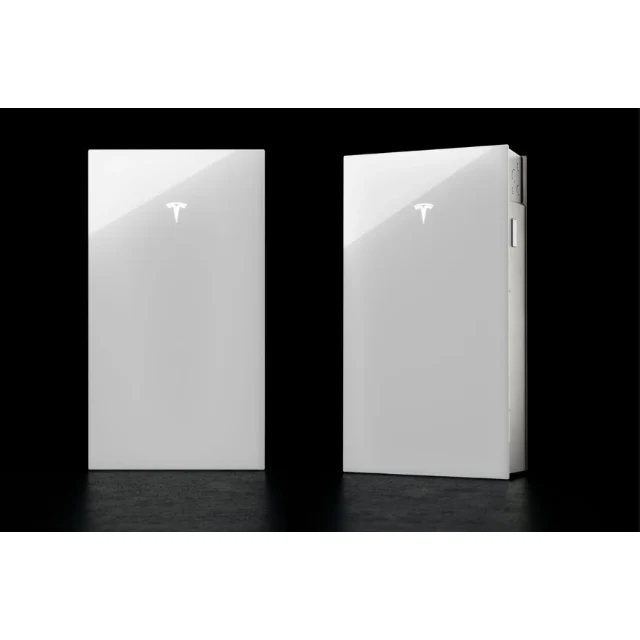
Powerwall 3 combines storage with a solar inverter. Expansion units add storage behind a Powerwall 3. The solar can be DC-coupled to the integrated inverter or remain on a supported AC-coupled inverter; the quote should identify which design is proposed.
Expansion units are pure capacity. They sit behind the main unit and add storage without a second inverter, which is why they cost less per kilowatt-hour than adding another complete Powerwall. The question they raise is honest sizing: whether your evening load justifies the next block, given that the steps are large and the arithmetic does not improve at scale.
The Gateway or Backup Switch is the hardware that separates your home from the grid in an outage and determines which circuits stay live. It is where two Tesla quotes diverge most — placement and the main-panel work behind it are the classic corner-cutting site — and it is where the whole-home-versus-partial question becomes concrete: which circuits, named on paper, and whether a backup sub-panel is part of the job.
The app is not an accessory here; it is the operating surface for tariff settings, backup reserve and monitoring, and the reason the product can be this simple. It leans on a live internet connection, so signal strength at the mounting position is a real design input — a unit installed where the wi-fi dies delivers a worse product than the one demonstrated in the showroom.
Put Tesla Powerwall to the test on your own numbers
Reading about it only goes so far — real quotes are where a Tesla Powerwall decision gets made. Request quotes in Missouri, subject to participating-installer availability. Free for homeowners.
What the Tesla Powerwall does best
Being bought once and understood immediately. For a home taking solar and storage together, the integrated inverter is where the value concentrates: one device, one install, one app, one company accountable for all of it. Households that want a battery rather than a hobby get the strongest version of this product.
Keeping doors open with the utility. Utility battery programs that pay for dispatch during peak events are a compounding advantage rather than a launch-day feature — many were built around Powerwall first, so enrolling later does not depend on whether your hardware made the list. Owners of narrower-supported batteries tend to make that discovery at the worst possible moment.
Surviving year six. The largest installed base in the market translates into a service channel that already exists, parts that already move, and installers who have already seen the edge cases. When hardware is meant to sit on a wall for a decade, the question of who answers the phone in the back half of that decade is not a soft one, and this is the brand with the longest American answer.
Staying used. Plenty of batteries are monitored enthusiastically for a month and never opened again; the Powerwall app is the one non-technical households demonstrably keep using, which matters because tariff settings and backup reserve only save money when somebody actually sets them. Polish sounds cosmetic until it is the difference between configured and abandoned.
Who a Tesla Powerwall suits — and who it does not
It suits the household that wants one good decision instead of five. Homes buying solar and battery together are the center of the target: the integrated inverter earns its keep, the install is the simplest in the category, and a single manufacturer answers for the whole system. If your reaction to configuration options is relief that there are none, this is your product.
It suits program-minded owners and long-holders. If joining a utility battery program — now, or when the offers improve — is part of your thinking, no battery keeps more of them open to you. And if you expect to own the house long past the purchase conversation, the largest installed base in the market is a rational thing to pay for.
An existing solar inverter may remain in a supported Powerwall 3 AC-coupled design. Ask the installer to document the inverter output, metering, gateway or switch and backup sizing checks before comparing designs.
Big-system buyers and fine-tuners are also better served by other architectures. Capacity comes in large fixed blocks, so a household wanting a little more storage ends up buying a lot more, and at bigger sizes the cost per kilowatt-hour loses to modular stacks convincingly. Households planning around multi-day outages with a generator in the mix will find that integration elsewhere.
On money, judge value per usable kilowatt-hour at the size you would actually buy — never the headline figure, and never a quote that still shows a federal credit for a 2026 install. Fixed blocks make this brand strongest at one unit and progressively harder to defend as units stack, so price a modular alternative at the same usable size before signing anything.
Tesla Powerwall in Missouri
Severe thunderstorms, tornado outbreaks and derechos are the outages homeowners here plan around — sudden, and sometimes days long. That is the case for a battery with a high continuous output and the ability to start heavy loads: a single Powerwall carries the circuits that matter through the evening, and Expansion units behind it stretch that into a longer plan — but only if the backed-up circuits were chosen on paper before the storm, not during it. In Missouri, ask each installer to model the outage you actually get, not the one on the brochure.
What Missouri utilities credit for exported solar is set utility by utility and rule by rule, so ask each installer to show the export credit on your own tariff: a stored kilowatt-hour is worth what you avoid buying, not what exporting earns, and that gap is the number the battery lives on. A Powerwall’s app-side tariff controls are simple enough that households genuinely use them, which is the practical difference between a battery that arbitrages your rate plan every day and one that just sits there looking expensive.
Put Tesla Powerwall to the test on your own numbers
Reading about it only goes so far — real quotes are where a Tesla Powerwall decision gets made. Request quotes in Missouri, subject to participating-installer availability. Free for homeowners.
The installer decides the Powerwall outcome
A Powerwall quote hides its differences in the backup design. Which circuits stay live is settled by Gateway placement and main-panel work at design stage, and it is the single most common gap between what buyers assumed and what they own. Have the backed-up circuits listed by name on the quote, and whether that needs a backup sub-panel; an installer who resists that is telling you something.
For DC-coupled arrays, confirm string design and rapid shutdown equipment. For AC-coupled arrays, confirm the existing inverter and Tesla sizing requirements. Mounting clearances, temperature and connectivity also need a site assessment.
A proper handover finishes the job: the app running on your actual utility rate plan, the backup reserve set to a number you chose, the connection verified from the unit’s real mounting position, and you shown which switch isolates what. Installs here run through the manufacturer’s own installer program, which narrows the workmanship spread — and still leaves design and handover quality to the specific people on your roof.
That is the matching problem this site exists to solve. Where participating installers are available for your address and brand, you can request quotes. There may be fewer than three or no matches. Check Tesla Powerwall experience where they have it. We sell no hardware, the service is free for homeowners, and matching a small number is deliberate: each installer has a genuine shot at the work, which is what buys you designed systems instead of templated ones.
Tesla Powerwall in this state
Why the installer matters more than the battery
The install decides the outcome more than the hardware does.
That is the part a brand cannot fix for you. Every installer we match you with in Missouri is vetted — typically 2+ years in business, with a track record of decent reviews. Matches depend on current participating installers for your address and brand; there may be fewer than three or none.
Battery incentives in Missouri
Residential Clean Energy Credit (IRC §25D) (federal) — The 30% federal tax credit for home solar and battery storage no longer applies to systems placed in service from January 1, 2026.
Missouri — no state battery program has been verified on this site yet. Ask each installer what your utility offers and to show the program page.
Ready for Tesla Powerwall quotes in Missouri?
Request quotes by ZIP code, subject to participating-installer availability. Any state or utility program you qualify for is applied at quote. Free, no obligation, maximum 3 installers ever.
Tesla Powerwall installers in Kansas City
- Tesla Powerwall battery installers in Kansas City — serving Kansas City and surrounds
More Missouri cities
- Tesla Powerwall installers St. Louis — serving St. Louis and surrounds
- Tesla Powerwall battery installation Springfield — serving Springfield and surrounds
- Tesla Powerwall battery installers in Columbia — serving Columbia and surrounds
- Tesla Powerwall installers Independence — serving Independence and surrounds
- Tesla Powerwall battery installers in Lee's Summit — serving Lee's Summit and surrounds
Page updated September 5, 2026