Spokane Valley · WA · FranklinWH aPower 2
FranklinWH battery installers in Spokane Valley, WA.
Request installer matches in Spokane Valley, subject to availability — FranklinWH-certified prioritized
Get your FranklinWH quotes for Spokane Valley
Do you have solar already?
Vetted installers only — typically 2+ years in business, decent reviews.
- ✓ AC-coupled aPower 2 storage can sit alongside existing solar
- ✓ aGate coordinates the battery with your home energy system
- ✓ Check state and utility rebates; eligibility varies
- ✓ Shortlist Solar-vetted installers, subject to availability
The second most-quoted home battery on US installer quotes, on the strength of its whole-home controller.
- ✓ 100% free, no obligation
- ✓ Up to 3 vetted installers — and no one else sees your details
- ✓ Vetted installers — typically 2+ years in business
Get my FranklinWH quotes for Spokane Valley Get my FranklinWH quotes — free · up to 3 vetted installers · takes about a minute.
What a FranklinWH system actually is
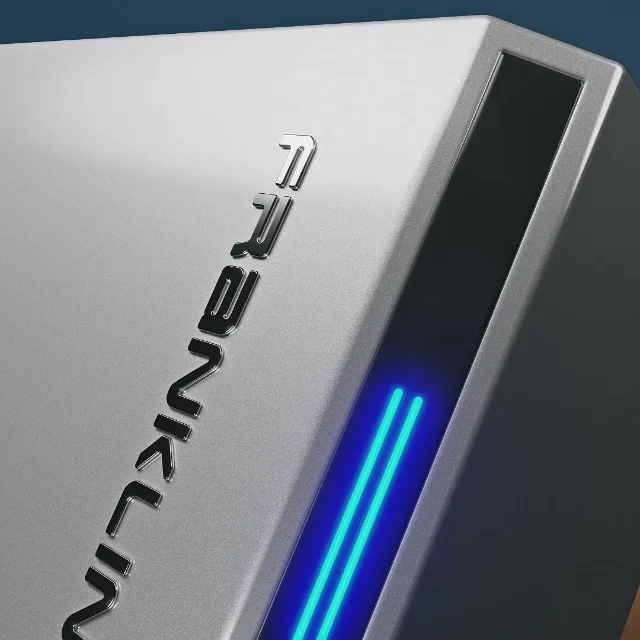
FranklinWH is two products that only make sense together: the aPower 2 battery and the aGate controller that sits between your solar, the grid, the battery and, if you have one, a generator. Because the system is AC-coupled it does not care whose inverter is on your solar, which makes it the cleanest whole-home retrofit in this comparison. Each aPower 2 is a large single block with a high continuous output, and the aGate can manage a stack of them. The trade-off is that the controller is the product — a quote that treats it as an optional extra has misunderstood what you are buying.
- aPower 2 — Large single block, stackable behind one controller. AC-coupled LFP battery with its own inverter — the storage half of the system.
- aGate — One per home. The energy management center that integrates solar, grid, battery and generator, meters the home and sheds loads in an outage.
- Smart Circuits and generator input — Optional. Per-circuit control of critical loads, and a generator input so a portable or standby unit recharges the battery.
FranklinWH at a glance — sourced
- Current FranklinWH line-up in the US: aPower 2 (15 kWh usable). source
- FranklinWH is AC-coupled: it sits beside the existing solar inverter, which stays in place on a retrofit. source
- Usable capacity runs from 15 kWh to 225 kWh. source
- Capacity can be added later without replacing the inverter. source
- The manufacturer warranty is 15 years. source
- It works with inverters from other brands, not only FranklinWH's. source
- Listed models are certified to UL 9540, the safety standard permit offices and utilities check for home storage. source
A good fit in Spokane Valley if…
- Homes with existing solar that want whole-home backup without replacing a working inverter
- Households in outage-prone areas that want a generator folded into the same system
- Buyers who want load management and per-circuit control, not just storage
- Larger homes where one big block covers the evening peak and a second covers the outage plan
Look at something else if…
- You are buying solar and storage together and want the simplest single-box install
- You want capacity in small increments rather than large blocks
- You do not need whole-home backup and would rather not pay for the controller
- Wall space is tight — the block and the controller both need room
A FranklinWH in Spokane Valley performs exactly as well as its configuration — and the configuration is decided by whoever installs it.
Why the installer matters more than the battery
The hardware is rarely the problem on a bad battery install — the design, the panel work and the commissioning are. Installers are vetted before they join — typically 2+ years in business with a track record of decent reviews. Matching depends on current participating installers for your address and brand. There may be fewer than three or no matches. Free for homeowners.
What specifically goes wrong on a FranklinWH install
- The aGate placement relative to the main service panel is the design decision that decides how much electrical work the job needs
- AC coupling means existing solar has to be metered through the controller correctly, or self-consumption never performs as modeled
- Load-shedding priorities configured wrong at commissioning leave owners surprised by what dropped during the first outage
- Generator inputs need a compatible generator and a transfer arrangement the installer actually designs, not a socket on the wall
- Large units need a solid mounting surface and a location that stays inside the operating temperature range
This is exactly what we vet for — get my FranklinWH quotes in Spokane Valley.
That's why FranklinWH quotes in Spokane Valley are only comparable when the scope matches. Here's what to hold constant.
Comparing FranklinWH quotes in Spokane Valley
We don't publish price bands, because installed prices move constantly and depend on your roof, service panel and utility. What we can tell you is what to hold constant so three quotes are actually comparable — match these first, then compare dollars per usable kWh.
- Whether the aGate is quoted as the core of the system or as an add-on — it is the core
- How many aPower 2 units, and whether the stack is sized to your outage plan or to your evening peak
- Whether generator integration is included, and what kind of generator the design assumes
- How your existing solar inverter is being metered through the aGate, which decides how well self-consumption works
- Panel work: whether the aGate replaces or sits beside your main service panel
A cheaper quote that skips backup hardware, assumes an inverter you don't have, or quietly changes the configuration isn't cheaper — it's a different job.
Request FranklinWH quotes on the same scope, subject to participating-installer availability for your address in Spokane Valley.
Battery incentives in Washington
- Residential Clean Energy Credit (IRC §25D) (federal) — The 30% federal tax credit for home solar and battery storage no longer applies to systems placed in service from January 1, 2026. What ended and what still applies
- Washington — no state battery program has been verified on this site yet. Ask each installer what your verified utility offers and to show the program page.
Still weighing a FranklinWH up? The Spokane Valley numbers and the deeper reading are below.
The Spokane Valley numbers
A delivery utility has not been verified for this Spokane Valley page. Identify yours by the service address before checking FranklinWH interconnection, export terms or rates; an overlapping ZIP code is not enough.
The Census Bureau estimates 108,267 residents in Spokane Valley in 2024. The city record uses Spokane County as its county reference and includes 7 overlapping ZIP codes. These are geographic facts, not evidence of participating FranklinWH installers or local availability.
The solar-resource sample for Spokane Valley is at 47.663353° latitude, -117.23278° longitude. Census land-overlap records include ZIPs 99216, 99206, 99212, 99016, 99037, 99027, 99202. These locate the page data; they do not establish utility territory or installer coverage.
NASA POWER climatology gives Spokane Valley an annual average of 3.8 peak sun hours per day. This regional solar-resource measure does not predict rooftop production or whether a FranklinWH will refill. Array size, orientation, shading, equipment losses, household use and battery settings all need a site-specific assessment.
At Spokane Valley's coordinates, NASA POWER climatology ranges from about 7.4 peak sun hours per day in Jul to 0.9 in Dec — a 8.2× ratio in the solar resource, not a measured generation ratio. For FranklinWH, assess seasonal production and household loads together; neither the annual average nor the lowest month alone determines battery capacity or refill frequency.
Show the seasonal solar resource
| Month | Peak sun hours | Illustrative kWh/day |
|---|---|---|
| Jan | 1.1 | 9.4 kWh |
| Feb | 2 | 17 kWh |
| Mar | 3.1 | 26.4 kWh |
| Apr | 4.6 | 39.1 kWh |
| May | 5.9 | 50.2 kWh |
| Jun | 6.5 | 55.3 kWh |
| Jul | 7.4 | 62.9 kWh |
| Aug | 6.1 | 51.9 kWh |
| Sep | 4.4 | 37.4 kWh |
| Oct | 2.6 | 22.1 kWh |
| Nov | 1.3 | 11 kWh |
| Dec | 0.9 | 7.7 kWh |
Monthly figures from the NASA POWER climatology (2001–2020) at Spokane Valley's coordinates; annual average 3.8 peak sun hours; Illustration: 10 kW × sun hours × an assumed 85% system factor, not a roof-specific production or battery-refill forecast.
FranklinWH vs Tesla Powerwall 3
- Where FranklinWH wins — A cleaner retrofit onto any existing solar, generator integration and load shedding in the base design, a larger single block with more continuous output, and a longer warranty framing.
- Where FranklinWH loses — No integrated solar inverter for a new install, more hardware on the wall, a thinner installer base than Tesla, and a system that is harder to justify if you only want a small battery.
We don't sell batteries, so we have no reason to talk one up.
What owning a FranklinWH is actually like
Spec sheets stop being interesting about a week after install. These are the things owners notice in year one.
- The app shows the whole home’s energy flow, not just the battery, because the aGate is metering everything — owners tend to use it more than a battery-only app.
- Generator integration is the feature owners in hurricane and wildfire country talk about most: the battery covers the short outages and the generator recharges it through the long ones.
- Load shedding means the system decides what to drop when the battery runs low, which is a comfort in an outage and something to configure deliberately on day one.
- The warranty is framed around energy throughput as well as years, so a household that cycles the battery hard should understand how that is counted.
Four questions to ask any FranklinWH quote
- Is the aGate in this quote, and where does it sit relative to my main panel?
- How is my existing solar being metered through the system?
- Which loads shed first when the battery runs low, and can I change that?
- If I add a generator later, what has to be true about it for the system to accept it?
Grid connection in Spokane Valley
- Utility interconnection — A FranklinWH installation in Spokane Valley requires checking interconnection requirements with the delivery utility for the exact address. Identify the utility from the bill or official service map. Ask the installer to identify the equipment and complete-system approvals required for the proposed configuration, file the application and flag any constraint in the quote.
- Electrical permit and inspection — the install needs an electrical permit from the local permitting authority and an inspection before it is switched on. Ask whether permit fees and the inspection are inside the FranklinWH quote.
- Backup scope is a design decision — whole-home versus a backup sub-panel depends on your main service panel and the transfer hardware, not on the battery alone. Have the circuits that stay live listed by name on the quote.
Ready for FranklinWH quotes in Spokane Valley?
Request FranklinWH quotes for Spokane Valley, subject to participating-installer availability.
Geography around Spokane Valley
This page covers the wider Spokane Valley area. A quote request uses your ZIP code; matches depend on current participating installers for your address and preferred brand.
ZIP codes in Spokane Valley: 99216, 99206, 99212, 99016, 99037, 99027, 99202.
Nearby places shown for geographic context:
- Millwood (99206) · 2.7 mi from Spokane Valley
- Liberty Lake (99019) · 6.0 mi from Spokane Valley
- Otis Orchards-East Farms (99027) · 7.5 mi from Spokane Valley
- Spokane (99224) · 9.3 mi from Spokane Valley
- Mead (99021) · 9.7 mi from Spokane Valley
- Town and Country (99208) · 9.9 mi from Spokane Valley
- Country Homes (99218) · 10.5 mi from Spokane Valley
- Green Bluff (99021) · 10.9 mi from Spokane Valley
- Fairwood (99218) · 11.2 mi from Spokane Valley
- Rockford (99030) · 15.4 mi from Spokane Valley
- Airway Heights (99001) · 16.2 mi from Spokane Valley
- Spangle (99031) · 17.5 mi from Spokane Valley
- Four Lakes (99004) · 17.6 mi from Spokane Valley
- Fairfield (99012) · 19.4 mi from Spokane Valley
- Fairchild AFB (99011) · 19.6 mi from Spokane Valley
- Cheney (99004) · 20.1 mi from Spokane Valley
- Suncrest (99026) · 20.6 mi from Spokane Valley
- Medical Lake (99022) · 22.2 mi from Spokane Valley
- Waverly (99039) · 22.5 mi from Spokane Valley
- Deer Park (99006) · 22.9 mi from Spokane Valley
- Clayton (99110) · 27.9 mi from Spokane Valley
FranklinWH installers across Washington, town by town
Every FranklinWH page in Washington, nearest to Spokane Valley first.
Comparing with the nearest big city? FranklinWH battery installation Seattle
- FranklinWH battery installation Spokane — 9 mi
- FranklinWH installers Bellevue — 229 mi
- FranklinWH battery installers in Everett — 231 mi
- FranklinWH battery installers in Renton — 232 mi
- FranklinWH battery installers in Kent — 233 mi
- FranklinWH battery installers in Federal Way — 240 mi
- FranklinWH battery installers in Tacoma — 246 mi
- FranklinWH battery installers in Vancouver — 290 mi
Beyond FranklinWH in Spokane Valley
Comparing FranklinWH with another brand in Spokane Valley? See Fox ESS installers Spokane Valley, Growatt battery installers in Spokane Valley, GoodWe battery installers in Spokane Valley, Anker SOLIX installers Spokane Valley, EcoFlow installers Spokane Valley, Lunar Energy installers Spokane Valley.
FranklinWH questions, Spokane Valley answers
Does FranklinWH work with solar from another brand in Spokane Valley?
Yes — this is the main reason to choose it. The system is AC-coupled and FranklinWH states the aGate is compatible with micro- and string inverters from the major brands, so your existing solar keeps its inverter and the aGate meters it. Ask the installer to confirm your specific inverter model against FranklinWH’s compatibility list before you sign.
Is the aGate really necessary for a Spokane Valley home?
It is the product. The aPower 2 is a strong battery on its own, but everything that distinguishes FranklinWH — whole-home management, load shedding, generator integration, metering of your existing solar — lives in the aGate. A quote without one is quoting a different, lesser system.
Can FranklinWH work with a generator in Spokane Valley, WA?
Yes, and it is one of the strongest reasons to pick it in hurricane, wildfire and ice-storm country. The aGate has a generator input so a standby or portable generator can recharge the battery during a long outage, with the battery covering the short ones on its own. The generator has to be compatible and the transfer arrangement designed properly — ask for both in writing.
How many aPower 2 units do I need if I live in Spokane Valley?
One large block covers the evening peak and a short outage for most homes; a second is what turns it into a multi-day backup plan for a house with central air. The aGate can manage a stack of units, so you can start with one and add later. Ask the installer to size to your outage plan, not just your bill.
Is the FranklinWH aPower 2 UL 9540 listed for Spokane Valley households?
FranklinWH lists the aPower 2 as certified to UL 9540 and UL 9540A among its safety standards, which is what most permitting authorities and utilities require on a residential storage application. Your installer files the listing with the permit and interconnection paperwork.
Will FranklinWH run my whole house in an outage across Spokane Valley?
That is what it is designed to do, within the limits of your battery capacity. The aPower 2 has a high continuous output and the aGate sheds lower-priority loads as the battery runs down, so the house stays live on what matters. Whether it lasts through the night depends on how many units you have and what is running — ask for a load model, not a promise.
Do I need a FranklinWH certified installer in Spokane Valley?
FranklinWH runs its own certified-installer program, and because the aGate is doing electrical work at the service panel, you want someone who has commissioned several of them. Ask the crew how many FranklinWH systems they have installed and whether the aGate placement they are proposing is the one they have done before.
Who installs a FranklinWH battery in Spokane Valley?
You can request FranklinWH quotes for Spokane Valley. Matching depends on current participating installers for your address and brand; there may be fewer than three or no matches. This city page does not establish installer availability. Free for homeowners.
How do I compare FranklinWH quotes in Spokane Valley?
Installed prices move constantly and vary by site, so compare on dollars per usable kWh rather than headline totals — and only once the scope matches. For this brand the variables that matter are: whether the aGate is quoted as the core of the system or as an add-on — it is the core; how many aPower 2 units, and whether the stack is sized to your outage plan or to your evening peak; whether generator integration is included, and what kind of generator the design assumes. Compare any available quotes on the same scope, then compare the installers harder than the numbers.
What battery incentives apply in Spokane Valley?
The federal Residential Clean Energy Credit ended for systems placed in service after December 31, 2025, so a 2026 FranklinWH install in Spokane Valley does not get the old 30% credit — a quote that still shows it needs re-pricing. No Washington battery program has been verified on this site yet; ask each installer what your utility offers and to show the program page, not a brochure line.
Who approves a FranklinWH install in Spokane Valley?
Your electric utility, through an interconnection application, and the local permitting authority, through an electrical permit. A good installer files both and flags any constraint in the quote — not after. What gets scrutinized depends on the configuration: the aGate placement relative to the main service panel is the design decision that decides how much electrical work the job needs.
Are your Spokane Valley installers FranklinWH-certified?
We do not have a current participating-installer record establishing FranklinWH certification or availability for every address in Spokane Valley. If a match is available, verify the specific crew, current license, brand training and relevant installation experience before signing.
Is a FranklinWH battery worth it in Spokane Valley?
Spokane Valley averages 3.8 peak sun hours in NASA POWER climatology. That does not establish household solar output, battery cycling or savings. Wildfire-season Public Safety Power Shutoffs and summer heat-wave grid strain are the outages homeowners here plan around. Ask for a site-specific production and load assessment, plus the import price and export credit on your actual plan. Confirm the delivery utility and any separate retail provider for your address.
Answered what you needed?
Request FranklinWH quotes for Spokane Valley, subject to participating-installer availability — free, no obligation.
Data and source notes. Spokane Valley data comes from NASA POWER (sun hours) and the US Census Bureau (population, places and ZIP codes). Utility references require an address check. FranklinWH product information is sourced below; its source review date is 2026-09-05. These records do not establish installer participation, manufacturer certification or availability. Verify any proposed crew's license, training and installation experience before signing.
- FranklinWH — aPower 2 product page
- FranklinWH — Components of the FranklinWH system
- EnergySage — best home batteries 2026 (installer quote data)
All Washington locations · All FranklinWH locations · About Shortlist Solar