Home battery review · US edition
Canadian Solar EP Cube review
Stackable battery modules paired with a hybrid inverter. A compact system still needs careful backup sizing.
On this page
Our take
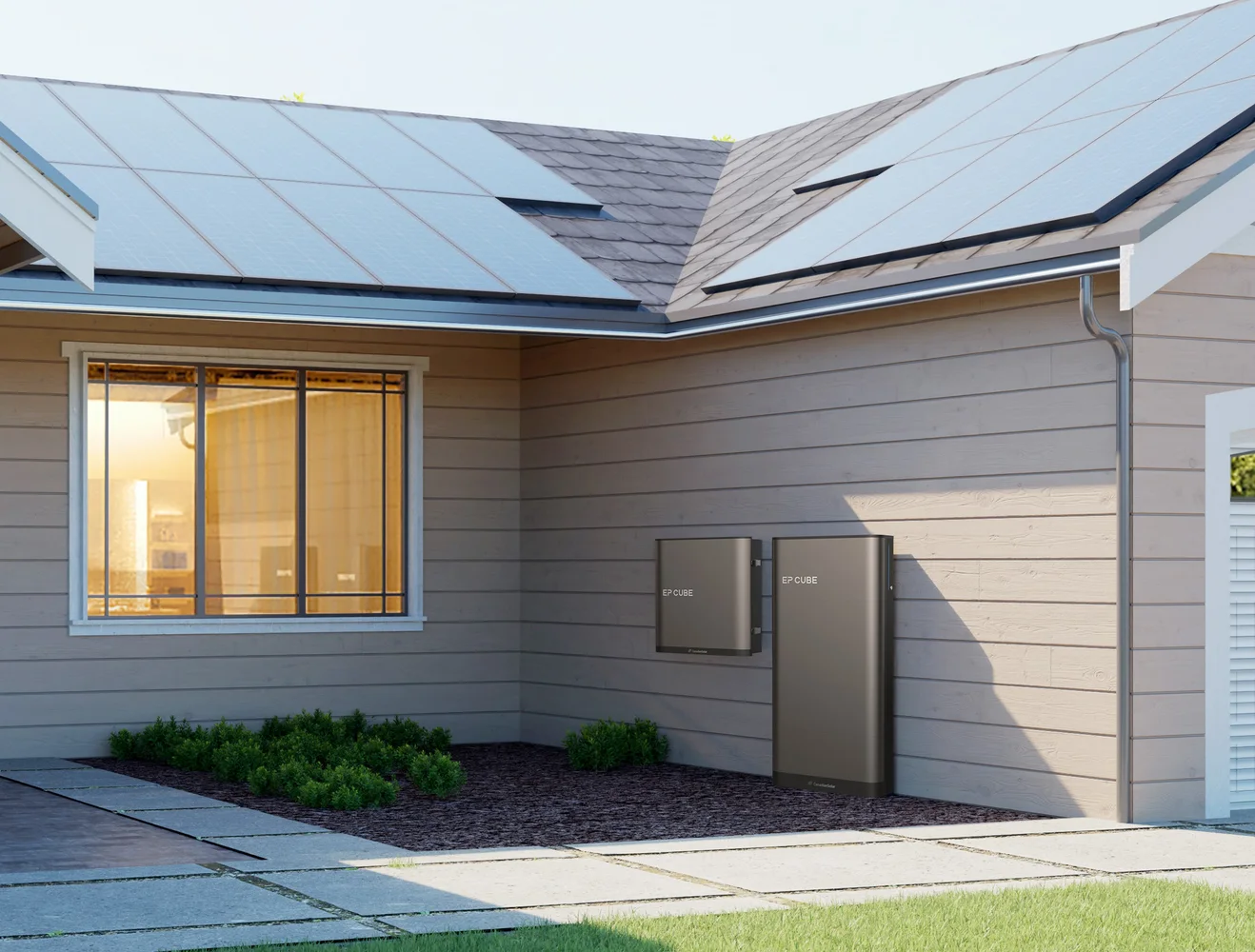
EP Cube is a sensible system to compare when you want the inverter and modular storage designed as one package. Its appeal is a defined range of stack sizes rather than assembling a battery bank from unrelated components. Focus the buying decision on the selected module count, outage output and existing solar connection. A neat enclosure is useful, but the complete electrical design determines whether it suits your home.
EP Cube at a glance
Check the model in your quote against these published details.
| Published capacity configurations | 9.9, 13.3, 16.6 or 19.9 kWh [1] |
|---|---|
| Battery modules | 3–6 modules in the published configuration range [1] |
| System architecture | Hybrid inverter with modular battery stack [1] |
| Warranty limit | 10 years or 6,000 cycles, whichever comes first; terms apply [1] |
Capacity, continuous output and peak output measure different things. Compare like-for-like values for the complete configuration.
What is included in the system?
EP Cube combines a hybrid inverter with stackable battery modules and the associated control equipment. Ask the proposal to name the inverter and gateway arrangement as well as the module count. That helps distinguish a complete backup installation from a storage-only equipment package. Confirm the actual EP Cube generation; a family name can cover products with different capabilities.
Conceptual energy flow. The equipment and connections depend on the installation.
What can it power during an outage?
The published performance information distinguishes operating conditions. In particular, a solar-assisted off-grid output figure should not be presented as guaranteed nighttime battery output. Request the continuous output for the exact stack when solar is unavailable, together with the backed-up circuits and any load restrictions. That is the figure to use when deciding what can run during an evening outage.
A high power rating does not guarantee a long runtime. Backup duration also depends on charge level, reserve settings, appliance use and available solar.
Existing solar and future expansion
Adding storage to a home with panels
A hybrid inverter can be useful in a new solar-and-storage project. Retrofitting an existing array requires a separate compatibility assessment. Ask which inverter stays, which connection method will be used and whether existing solar can operate while the grid is disconnected. The installer should explain that arrangement before recommending removal of useful equipment.
Planning for more capacity
The module range gives a useful starting point for sizing, but future expansion has practical conditions. Record the supported number of modules, placement requirements and the rules for combining modules installed at different times. Ask whether an eventual increase changes the output rating or primarily the energy available. Those are different reasons to expand.
The advantages and the trade-offs
Reasons to shortlist it
- A coordinated hybrid inverter and modular battery design.
- Several published stack sizes let the installer tailor stored energy.
- Manufacturer documentation covers the system as a package.
What to weigh up
- The inverter’s solar-assisted output is not automatically battery-only output.
- Future module additions must follow the supported expansion rules.
- The classic EP Cube reviewed here should be distinguished from other EP Cube variants.
Warranty, monitoring and support
The warranty has both a time limit and a cycle limit. Read the applicable document for capacity retention, operating conditions and excluded expenses. Establish who handles diagnosis and labor if the inverter and battery need attention together. At handover, verify monitoring access and ask the installer to demonstrate reserve settings and the intended backup mode.
A useful handover includes your equipment schedule, the applicable warranty documents, homeowner access to monitoring and a named service contact. Ask the installer to demonstrate the operating mode you are buying.
What affects the installed cost?
Compare the same stack size and the same backup scope across quotes. The inverter, control equipment, mounting, cable route and panel changes can be as important to the installed price as an extra module. A quote that lists only the battery stack is insufficient for comparison with a completed home installation.
| Equipment | Battery quantity, inverter, gateway or transfer equipment and mounting |
|---|---|
| Electrical work | Panel changes, cable routes, protection and backed-up circuits |
| Delivery | Permits, installation, commissioning and monitoring handover |
| Aftercare | Workmanship cover, diagnostic visits and replacement labor |
Is EP Cube right for your home?
Consider EP Cube for a coordinated modular installation where the selected capacity and battery-only output meet your needs. Compare other architectures if retaining an existing solar inverter is a priority or if your backup loads require a different output profile. Ask for a clear configuration, not simply “one EP Cube.”
Compare an actual installation.
Take these questions to an installer and get a design for your home.
Your questions, answered
Does a larger stack always mean more AC power?
No. Stored energy and output are different limits. Check the inverter and battery-only output for the proposed configuration.
Can I add modules later?
Ask for the current expansion rules, including permitted module combinations and recommissioning requirements.
Which warranty limit applies first?
The published limit is ten years or 6,000 cycles, whichever comes first, subject to the full warranty conditions.
Sources and review method
This is a research-based assessment of published manufacturer information, not a hands-on laboratory test or an owner-review average. Our judgments explain the buying implications of the equipment and its limitations. We do not assign star ratings, invent installation prices or infer local installer availability from a product page.
Check the current US model, configuration and warranty before ordering. Where regional compatibility or terms could not be established, we say so in the review. Shortlist Solar is an installer referral service; a quote request is optional and subject to participating-installer availability.