Battery bank review · US edition
HomeGrid Stack’d Series review
A modular battery stack for a compatible inverter, with a clear distinction between DC battery output and household AC power.
On this page
Our take
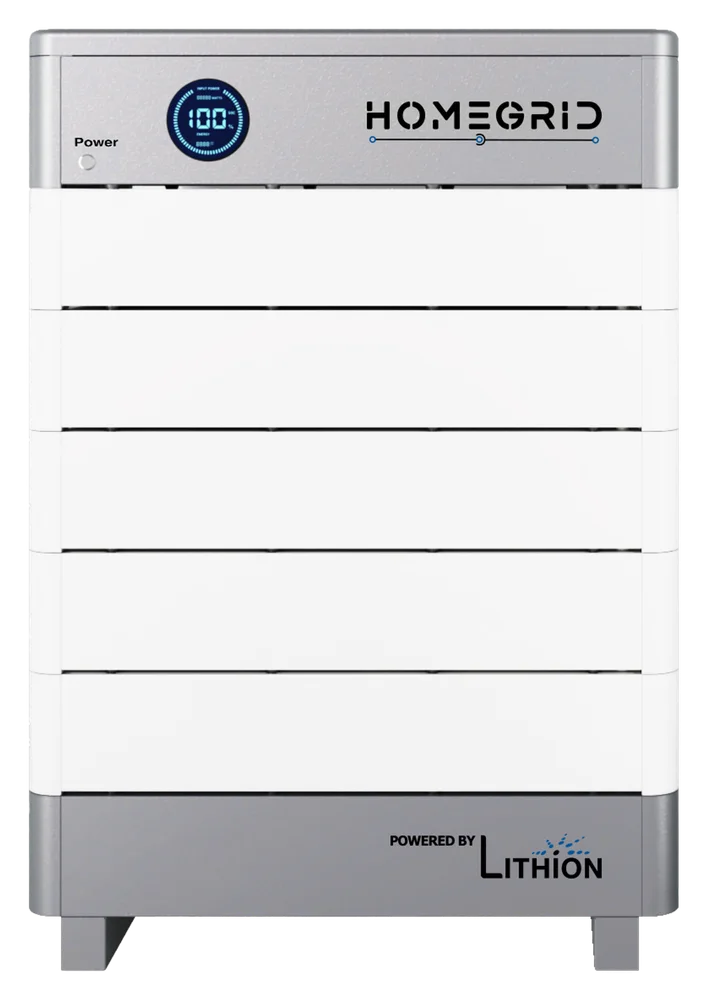
Stack’d is worth a look when you want a battery bank that can be sized in modules. The stack format offers a different installation approach from a single large enclosure. Its usefulness depends on the inverter pairing, module count and physical site. Treat a published battery output figure as a battery specification until the installer shows the continuous AC output of the complete home system.
Stack’d Series at a glance
Check the model in your quote against these published details.
| Product family | Stack’d Series modular battery [1] |
|---|---|
| Maximum published stack energy | 38.4 kWh [1] |
| Published battery output | Up to 14.4 kW; complete AC system output depends on inverter and configuration [1] |
| Cold-location option | Heated modules; confirm the selected version [1] |
Capacity, continuous output and peak output measure different things. Compare like-for-like values for the complete configuration.
What is included in the system?
Stack’d modules form a battery bank controlled alongside a compatible inverter. The quote should identify the battery configuration, base and control components, communications and protective equipment. Do not assume every photographed stack represents the same usable energy. Count the modules in the proposal and check their exact product codes.
Conceptual energy flow. The equipment and connections depend on the installation.
What can it power during an outage?
A stack with plenty of energy can support a longer outage only if the load plan is realistic. The inverter and battery discharge limits determine what runs at once. Ask for an example with the appliances you actually use, including any well pump or air conditioning. Confirm whether the proposed system backs up a selected subpanel or the main electrical service.
A high power rating does not guarantee a long runtime. Backup duration also depends on charge level, reserve settings, appliance use and available solar.
Existing solar and future expansion
Adding storage to a home with panels
HomeGrid batteries do not independently decide how existing solar is connected. That decision belongs to the inverter and control design. Have the installer show whether the existing solar inverter stays and how it behaves during a grid outage. If replacement is proposed, request the reason and the effect on the existing system warranty.
Planning for more capacity
A modular format makes expansion worth discussing early. Leave suitable room and obtain the current requirements for adding modules to an established stack. Ask which parts of the initial installation are sized for the final intended bank. More modules may provide more DC capability, but an unchanged inverter can still limit household output.
The advantages and the trade-offs
Reasons to shortlist it
- Modular stack configuration.
- Published storage range reaches 38.4 kWh per stack.
- Heated module options are available for suitable designs.
What to weigh up
- A compatible inverter is a separate part of the project.
- The module choice and installation conditions matter in cold locations.
- Maximum battery output is not a promise of equivalent AC output at the house.
Warranty, monitoring and support
Keep the warranty and installation instructions for the specific module version, including whether it is heated. Establish one service contact for the integrated system so a communications fault does not become a dispute between suppliers. Ask for a handover showing battery state, inverter status and any temperature-related operating restrictions.
A useful handover includes your equipment schedule, the applicable warranty documents, homeowner access to monitoring and a named service contact. Ask the installer to demonstrate the operating mode you are buying.
What affects the installed cost?
Compare installed stacks with the same module count, inverter and backup scope. Include the base, controller, communications hardware and electrical protection. Heated modules or a different installation location may affect the equipment choice. The finished system price is a more useful comparison than a cost per module.
| Equipment | Battery quantity, inverter, gateway or transfer equipment and mounting |
|---|---|
| Electrical work | Panel changes, cable routes, protection and backed-up circuits |
| Delivery | Permits, installation, commissioning and monitoring handover |
| Aftercare | Workmanship cover, diagnostic visits and replacement labor |
Is Stack’d Series right for your home?
Stack’d is a good candidate for a modular battery-bank design with an installer who supports the pairing. It deserves a different comparison from an integrated AC battery: assess the storage bank and inverter as a complete system. If expansion is the main attraction, have that later configuration documented before purchasing the first stack.
Compare an actual installation.
Take these questions to an installer and get a design for your home.
Your questions, answered
Is the inverter part of every Stack’d quote?
Do not assume so. Ask for an itemized system proposal identifying the compatible inverter and all control equipment.
Does the maximum storage figure apply to every stack?
No. Capacity depends on the number and type of modules supplied.
Do I need heated modules?
That depends on the installation environment and the selected model’s operating requirements. Have the installer check the site against the manufacturer instructions.
Sources and review method
This is a research-based assessment of published manufacturer information, not a hands-on laboratory test or an owner-review average. Our judgments explain the buying implications of the equipment and its limitations. We do not assign star ratings, invent installation prices or infer local installer availability from a product page.
Check the current US model, configuration and warranty before ordering. Where regional compatibility or terms could not be established, we say so in the review. Shortlist Solar is an installer referral service; a quote request is optional and subject to participating-installer availability.